
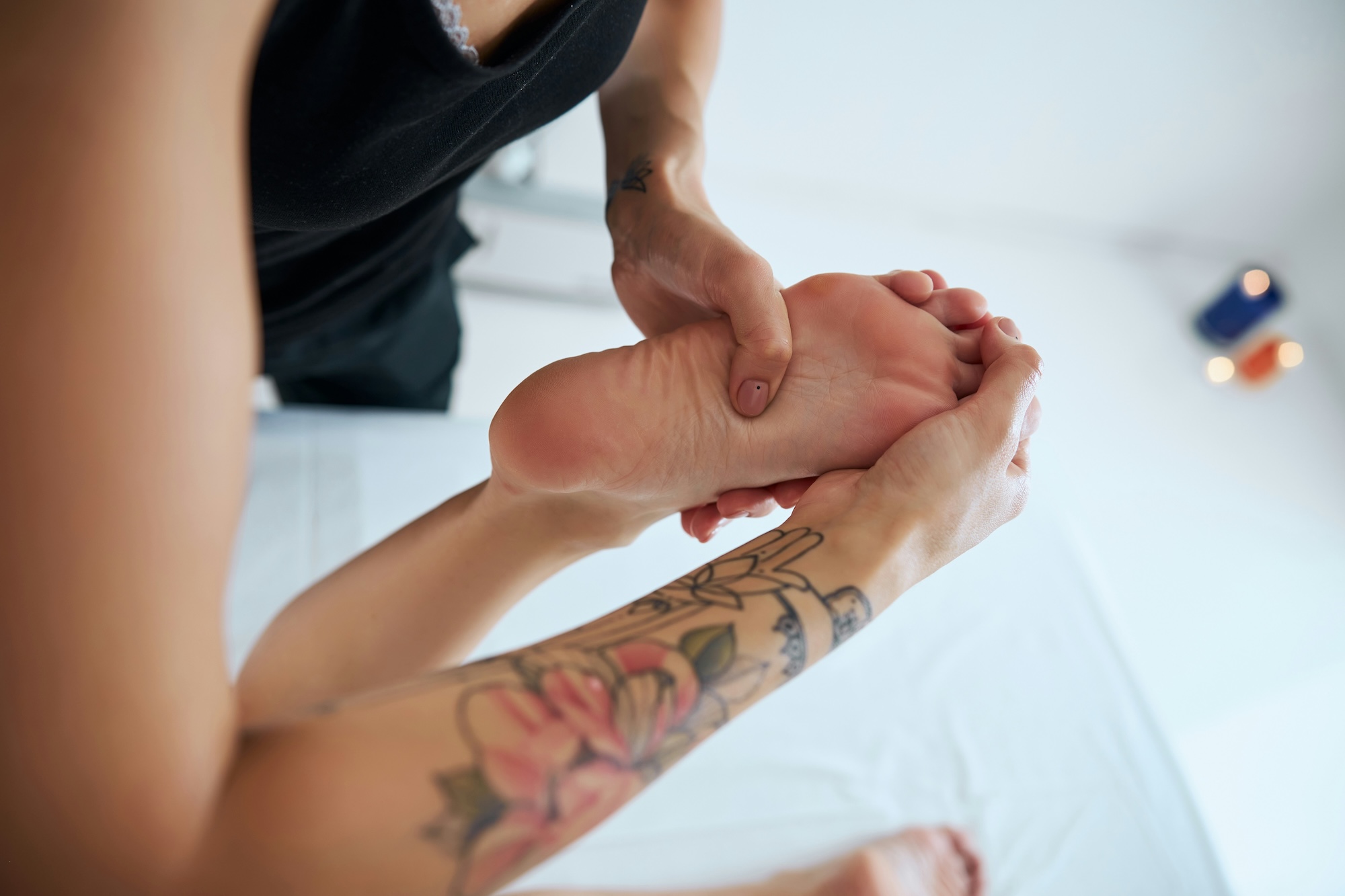
Lateral Foot Pain: Could It Be Peroneal Tendinopathy?
Have you been feeling a persistent ache along the outside of your foot when you walk, run, or stand for long periods? Perhaps there is a sharp pain near your ankle bone that makes uneven ground feel unstable or risky.
If you are experiencing lateral foot pain, a frequent culprit is peroneal tendinopathy. While it can be frustrating and limit your mobility, it is highly treatable. At Lake Country Physiotherapy in Orillia, we focus on moving beyond temporary relief. By rebuilding tendon capacity and improving ankle mechanics, you can return to confident, pain-free movement.
What Is Peroneal Tendinopathy?
Peroneal tendinopathy refers to the irritation or overload of the peroneal tendons. These two tendons, the peroneus longus and peroneus brevis, run down the outside of your lower leg, wrap behind the outer ankle bone, and attach to the side of your foot.
These tendons act as the primary dynamic stabilizers for your ankle. Their main functions include:
- Stabilizing the ankle: Especially during walking and running on uneven surfaces.
- Arch support: Assisting in maintaining the structural integrity of your foot.
- Preventing “rolling”: Counteracting the forces that cause the ankle to roll inward.
- Push-off power: Assisting with the propulsion phase of your stride.
When these tendons are overworked or lack the strength to handle the stress of your activities, they become irritated. Over time, this results in the pain and weakness characteristic of tendinopathy.
Why Does Lateral Foot Pain Develop?
Unlike a sudden fracture, lateral foot pain from tendinopathy typically develops gradually. It is an “overuse” injury where the rate of tissue breakdown exceeds the rate of repair.
Common contributing factors include:
- History of Ankle Sprains: Previous injuries can leave the tendons stretched or weakened.
- Training Errors: Sudden increases in running mileage, walking volume, or hill training.
- Surface Changes: Moving your workouts from flat pavement to uneven trails.
- Poor Footwear: Worn-out shoes that no longer provide lateral support.
- Biomechanical Issues: High arches (cavus feet) often place excessive load on the outer edge of the foot.
- Kinetic Chain Weakness: Weakness in the hips or glutes that forces the ankle to work harder to maintain balance.
In Canada, activity-limiting injuries are a major concern for millions. Because your feet absorb several times your body weight with every running stride, they are particularly vulnerable to these overload conditions.
Signs Your Pain May Be Peroneal Tendinopathy
Symptoms can vary based on severity, but common indicators include:
- Localized Pain: Aching or sharp pain along the outside of the ankle or the outer edge of the foot.
- Activity-Related Flare-ups: Pain that worsens during exercise and subsides with rest.
- Point Tenderness: Sensitivity specifically behind the bony bump on the outside of your ankle.
- Visible Swelling: Thickening or puffiness along the path of the tendon.
- The “Giving Out” Sensation: A feeling of ankle instability, especially when stepping on grass or cracked sidewalks.
Why Stability Matters More Than You Think
When your peroneal tendons are compromised, your body often compensates by altering your gait. What starts as a “foot problem” can quickly evolve into a “chain problem.” Over time, unaddressed tendinopathy can lead to:
- Recurrent Ankle Sprains: A lack of lateral stability makes you prone to rolling your ankle.
- Secondary Strains: Increased stress on the knees, hips, or lower back as they try to stabilize your movement.
- Reduced Balance: A loss of proprioception (your brain’s ability to sense where your foot is in space).
Effective treatment in Orillia focuses on restoring the entire movement chain, not just the localized pain.
Peroneal Tendinopathy Treatment: What Actually Works?
A common mistake is assuming that rest alone will “fix” the tendon. While rest can calm the initial inflammation, tendons actually require gradual, controlled loading to become strong again.
1. Progressive Tendon Loading
This is the cornerstone of rehab. We use targeted exercises to improve the tendon’s ability to handle stress. This includes:
- Resisted Ankle Eversion: Strengthening the specific outward movement of the foot.
- Isometric Holds: Holding tension in the muscle to reduce pain and build baseline strength.
- Heavy Slow Resistance (HSR): Controlled calf raises and ankle drills to remodel the tendon fibers.
2. Foot Stability Exercises
To prevent the injury from returning, we must train the “intrinsic” muscles of the foot.
- Single-Leg Balance Drills: Challenging the ankle to maintain stability on various surfaces.
- Short-Foot Activation: Learning to engage the arch muscles.
- Lateral Band Walks: Strengthening the hips to improve lower limb loading..
3. Gait and Running Assessment
For active individuals, we analyze how your foot hits the ground. Adjustments to your cadence (steps per minute), stride length, or footwear can significantly offload the peroneal tendons and allow for a faster return to sport.
4. Manual Therapy
Hands-on techniques, such as soft tissue mobilization and joint glides, can help improve ankle mobility and reduce the “stiff” feeling that often accompanies chronic tendinopathy.
The Role of Bracing and Orthotics
In some situations, short term support is necessary.
- Taping or Bracing: Can provide a “safety net” for the ankle during the early stages of rehab.
- Orthotics: May be helpful for individuals with high arches to redistribute pressure.
However, we view these as temporary aids. Support without improved muscle function is rarely a long term solution. Our goal is to build a foot that is strong enough to support itself.
How Long Does Recovery Take?
Tendon healing is a physiological process that requires consistency. Most mild to moderate cases of peroneal tendinopathy see significant improvement within six to twelve weeks. The key to success is staying within a “pain-free” or “low-pain” zone during rehab, pushing too hard can cause setbacks, while doing nothing leads to atrophy.
When Should You Book an Assessment?
Early intervention is the best way to prevent a minor ache from becoming a chronic limitation. Consider seeking professional guidance if:
- Your foot pain persists for more than two weeks despite rest.
- You feel “wobbly” or unstable when walking on uneven ground.
- Pain is preventing you from completing your usual runs or walks.
- You have a history of repeated ankle sprains.
Take the First Step Toward More Stable Feet
Outer foot pain can make every step feel uncertain, but it does not have to be your “new normal.” By addressing the root cause of the capacity of your tendons and the stability of your ankle you can regain your confidence and move comfortably again.
Contact our Lake Country Physiotherapy, Orillia team today to book your assessment and start your path to recovery.