What Is Shockwave Therapy?
You have rested it, stretched it, changed your shoes, and done your exercises. So why is that heel, elbow, or tendon still sore? If you have been searching for something new to try, you may have come across shockwave therapy. This guide from Lake Country Physiotherapy in Orillia explains what shockwave therapy is, what the research says, which conditions it suits best, and who should not have it.
What Is Shockwave Therapy?
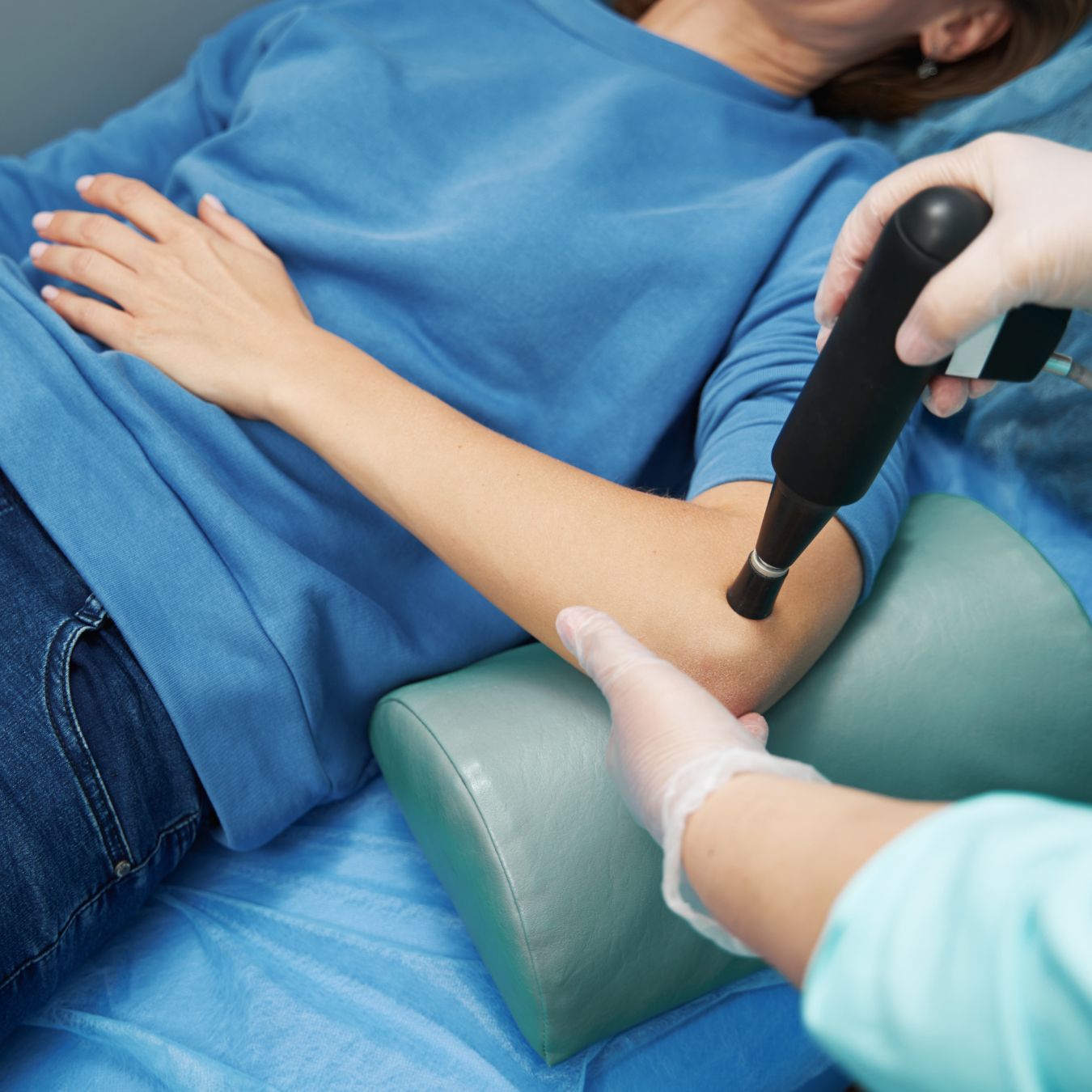
Shockwave therapy, formally called extracorporeal shockwave therapy (ESWT), uses short bursts of pressure waves delivered through the skin with a handheld applicator. “Extracorporeal” just means the waves are generated outside the body. It started in the early 1980s as a treatment for kidney stones and later found its way into orthopaedics and rehab.
Despite the name, it is not an electric shock, and it is not like therapeutic ultrasound. Each pulse is brief and mechanical. Researchers have suggested several ways it might help, such as influencing blood flow, tendon cells, and the body’s repair response.
Focused vs. Radial Shockwave Therapy
You may hear two terms.
| Type | How it works | Common use |
|---|---|---|
| Focused shockwave | Energy is concentrated at a set depth in the tissue | Deeper tendons and bone |
| Radial shockwave | Pressure spreads out from the applicator, strongest at the skin | Surface-level tendons and the plantar fascia in the foot |
What a Typical Course Looks Like
A course usually includes three to five sessions, spaced one to two weeks apart. The applicator is moved over the sore spot while you give feedback. The sensation should feel strong but tolerable, and an international panel suggested that pain during tendon treatment should stay at or below 6 out of 10 (Rhim et al., 2025). Local anaesthetic is usually avoided, since it may reduce the effect. Each session is short, and you can usually walk out and carry on with your day.
What Does the Research Say About Shockwave Therapy?
The answer is mixed, and it depends on the condition and the part of the body being treated.
In 2025, a panel of 41 clinicians and researchers from 13 countries used a three-round consensus process to make recommendations for shockwave therapy in sports medicine. They agreed on 69 of 118 statements. For several tendon and fascia problems, they supported using it as an addition to other care, not as a stand-alone fix (Rhim et al., 2025).
Beyond that panel, the research picture changes depending on where in the body shockwave therapy is used. Clinical trials show substantial benefits for disorders such as plantar fasciitis. The evidence looks more mixed for the Achilles and patellar tendons (Charles et al., 2023). In other words, how well shockwave therapy works may depend on the area being treated and the tissue involved.
Which Conditions Is Shockwave Therapy Best Suited For?
The consensus panel reached full agreement (100%) on shockwave therapy as an addition to other care for these tendon and fascia problems:
- plantar fasciopathy, often felt as heel pain with first steps in the morning
- insertional Achilles tendinopathy, where the tendon meets the heel bone
- common extensor tendinopathy, also called tennis elbow
- proximal hamstring tendinopathy, felt deep in the buttock
They also supported it for several other conditions, including midportion Achilles tendinopathy, rotator cuff tendinopathy, patellar tendinopathy, gluteal tendinopathy, and greater trochanteric pain syndrome. For bone problems such as bone stress injuries, the panel supported use in some cases but said the evidence is weaker than for tendons. Most of the panelists who answered would not recommend radial waves for bone conditions.
Shockwave therapy tends to be considered when pain has lasted for months, and when exercise, load changes, and time have not been enough on their own. It works best as one part of a plan.
Shockwave Therapy Contraindications and Precautions
Shockwave therapy is not for everyone and there are situations where it should not be used on the treated area:
- active infection
- cancer or a tumour in or near the treatment area
- open wounds or broken skin
- direct treatment over major blood vessels or nerves
- a new blood clot (thrombosis)
- an acute fracture
- pregnancy, when the baby would be in the path of the waves
- a pacemaker or other implant in the treatment field
- growth plates in children and teens
Extra care, or a conversation with your doctor, is needed if you:
- have a bleeding disorder or take blood thinners
- have had a corticosteroid injection in the area recently
- have a joint replacement near the treatment area
- take anti-inflammatory medication
- have uncontrolled high blood pressure or another medical condition that needs review
This list is a general guide, not a complete one. Your physiotherapist will go through your health history before treatment and may check with your doctor.
Possible Side Effects
Most side effects are mild and short-lived. The most common are pain at the treatment site, redness, and bruising. Others include swelling, a small collection of blood under the skin, tingling or numbness, and headache. Serious problems such as tendon rupture are thought to be very rare. The panel considered the risk of tendon rupture minimal. Contact your clinic if you have severe or worsening pain, a lot of swelling, or numbness that does not settle.
What to Expect Afterward
For tendons and fascia, you generally do not need to stay off your feet or avoid movement after treatment. Many people carry on with their usual walking and exercises, adjusting only if symptoms flare. Progress is usually gradual over weeks. If you feel no change after a full course, that is useful information too, and it is a good reason to rethink the plan with your physiotherapist.
Is Shockwave Therapy Right for You?
A few questions can help:
- Has your pain lasted several months, despite rest, changes to activity, and a sensible exercise plan?
- Has someone confirmed the pain is coming from a tendon or fascia, and not from another source such as a nerve or joint?
- Are any of the contraindications above relevant to you?
If you are unsure, an assessment is the best way to find out.
How We Can Help at Lake Country Physiotherapy
At Lake Country Physiotherapy in Orillia, we offer radial shockwave therapy alongside physiotherapy assessments and manual therapy. We will look at what is causing your pain, check whether shockwave therapy fits your situation, and build a plan that includes exercise. If it is not the right choice, we will tell you. Whether you are walking along Couchiching Beach or on your feet all day at work, reach out to book an assessment whenever you are ready.
References
Charles, R., Fang, L., Zhu, R., & Wang, J. (2023). The effectiveness of shockwave therapy on patellar tendinopathy, Achilles tendinopathy, and plantar fasciitis: A systematic review and meta-analysis. Frontiers in Immunology, 14, Article 1193835. https://doi.org/10.3389/fimmu.2023.1193835
Heide, M., Røe, C., Mørk, M., Myhre, K., Brunborg, C., Brox, J. I., & Hoksrud, A. F. (2024). Is radial extracorporeal shock wave therapy (rESWT), sham-rESWT or a standardised exercise programme in combination with advice plus customised foot orthoses more effective than advice plus customised foot orthoses alone in the treatment of plantar fasciopathy? A double-blind, randomised, sham-controlled trial. British Journal of Sports Medicine, 58(16), 910–918. https://doi.org/10.1136/bjsports-2024-108139
Rhim, H. C., Singh, M., et al. (2025). Recommendations for use of extracorporeal shockwave therapy in sports medicine: An international modified Delphi study. British Journal of Sports Medicine, 59(18), 1287–1301. https://doi.org/10.1136/bjsports-2024-109082